Janakpur gets the crowds, but the forest 20 kilometres to its northeast rarely makes anyone's itinerary, even though it holds the last major patch of untouched lowland forest left in Nepal's eastern Terai. Dhanushadham Protected Forest covers 360 hectares in Dhanushadham Municipality, Dhanusha District, Madhesh Province.
The Government of Nepal declared it a protected forest on February 25, 2014, and designated it an illicit felling and grazing-free zone. The forest takes its name from the adjoining Dhanush Temple, where local belief holds that a broken fragment of Lord Shiva's divine bow from the Treta Yug of the Ramayana rests as a sacred landmark.
Walk in and the canopy is almost entirely Sal (Shorea robusta), standing at a density of roughly 194 trees per hectare, mixed with smaller numbers of Dalbergia sissoo and Bombax ceiba. Surveys have counted around 40 tree species, 31 shrub species, and 40 herb species in total. What stands out to foresters is the size-class distribution of the trees, which follows a reverse "J" shape, a pattern that signals healthy natural regeneration, and Sal saplings in particular are regrowing strongly.
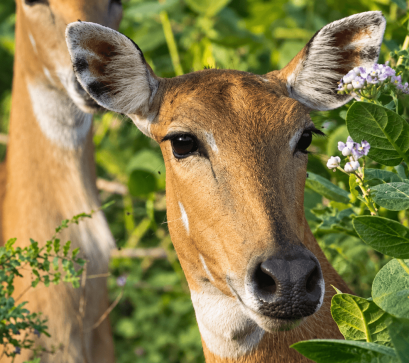
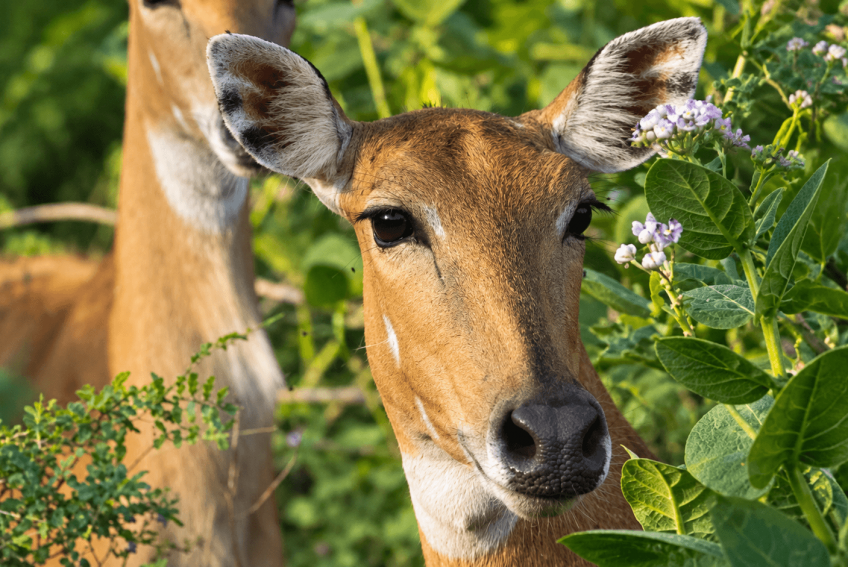
Beyond the trees, the forest works as a wildlife corridor along the Baluwa River, connecting the area to the Chure Hills so animals can move between habitats instead of being boxed in. Ten mammal species have been recorded here, including blue bull antelope, wild boar, and rhesus macaques, alongside 39 bird species, 14 reptile species, and 3 amphibian species. Migratory birds pass through seasonally, so early morning is when the forest is most alive.
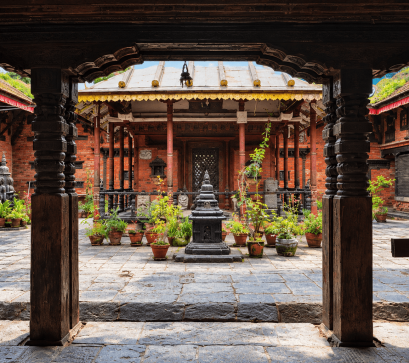
None of this happens on its own. The Mithila Wildlife Trust works with the District Forest Office to regenerate plant cover, restore lakes such as Parshuram Lake and Rani Pokhari, build infrastructure, and run plantation programmes with national and international partners. The forest also borders the Dhanush Temple, a site that matters to both Nepali and Indian pilgrims and adds a cultural layer to the trip.
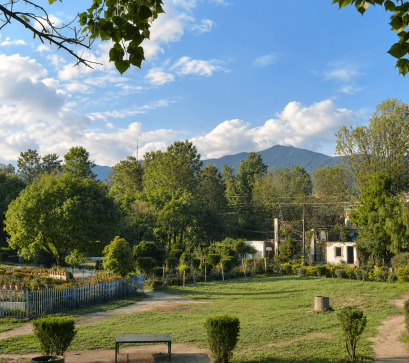
If you're planning to go, the forest is open daily from 8:00 AM to 5:00 PM to both Nepali and international visitors. There are easy, well-maintained trails for family walks and longer routes for light hiking, plus picnic tables, a playground, and boating on the restored lakes.
Go early if birdwatching or wildlife spotting is the goal, since the heat later in the day pushes animals into cover. It's a designated grazing and felling-free zone, so stick to marked trails, carry your rubbish back out, and keep noise down. Bring water and comfortable walking shoes, and pair the visit with the neighbouring Dhanush Temple, since the two sit side by side and most people see them in the same trip.