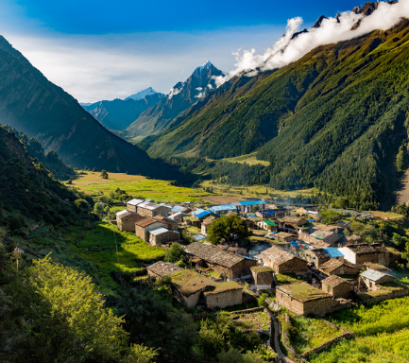
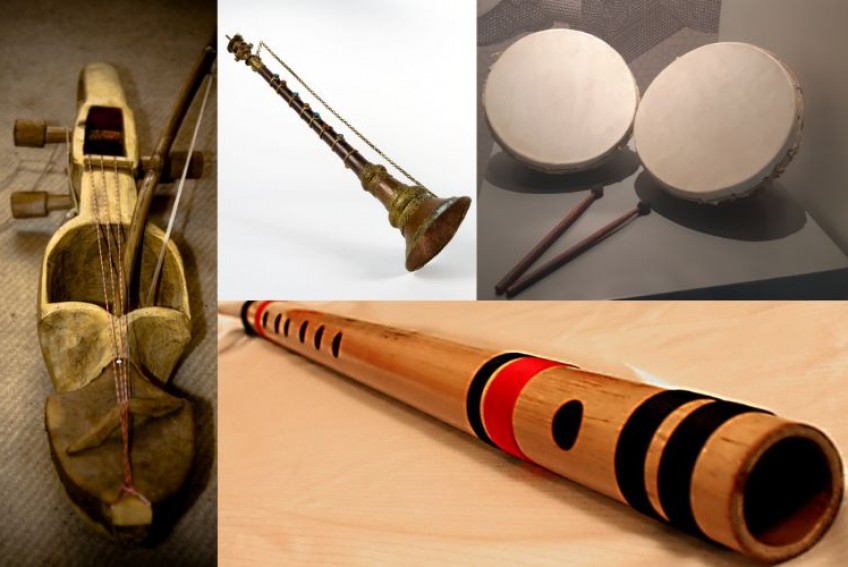
Nepal is a country of remarkable cultural diversity, and its traditional music reflects the richness of its many ethnic communities. Across the hills, mountains, and plains, locally used musical instruments play a vital role in festivals, rituals, storytelling, and daily life. These instruments are not merely tools for producing sound; they embody cultural identity, history, and spiritual expression.
Madal
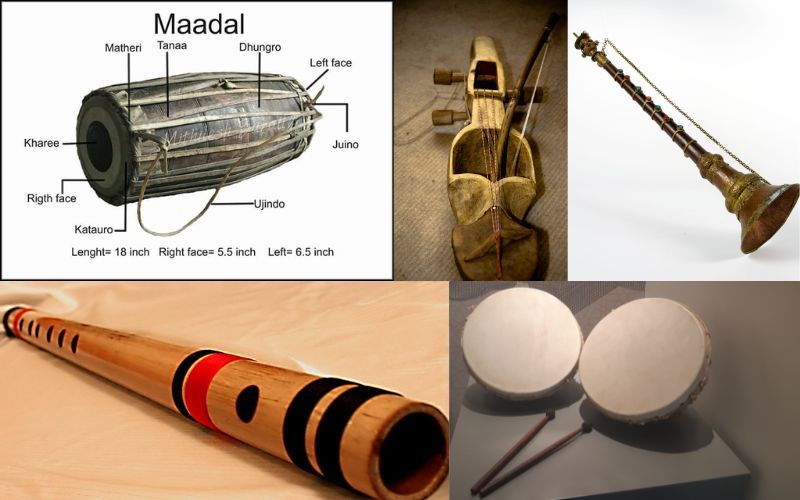
One of the most widely recognised instruments in Nepal is the Madal, a double-headed hand drum commonly used in folk music, particularly in the hilly regions. Crafted from wood and animal skin, it produces a variety of rhythmic patterns and is essential in social gatherings, dances, and celebrations.
The Sarangi
The Sarangi is another important traditional instrument, especially associated with the Gandharva community, historically known as travelling musicians. It is a bowed string instrument capable of producing deeply expressive and emotive sounds. Traditionally used for storytelling and ballads, the Sarangi has experienced a revival in recent years and is now also featured in contemporary and fusion Nepali music.
The Bansuri
The Bansuri, a bamboo flute, is widely played across Nepal in both folk and classical (Hindustani) musical traditions. Though common throughout South Asia, it holds a strong presence in Nepali music. Its gentle and melodic tones are often associated with nature and pastoral life.
Dungchen and Gyaling
In the Himalayan regions, particularly among Sherpa and Tibetan-influenced communities, instruments such as the Dungchen and Gyaling are used in Buddhist religious ceremonies. The Dungchen is a long telescopic trumpet that produces deep, low-pitched, droning sounds, while the Gyaling is a reed instrument with a penetrating tone. Both are integral to monastic rituals and spiritual practices.
The Damphu
The Damphu is a traditional frame drum of the Tamang community, played during Tamang Selo songs and dances. It holds cultural and mythological significance and is often decorated with symbolic designs.
Panche Baja
Nepal also has traditional musical ensembles such as the Panche Baja, commonly performed during weddings and other auspicious occasions. This ensemble typically includes instruments like the Narsingha (a curved horn), Damaha (a kettle drum), Tyamko (a small drum), Dholki, and Shehnai (a wind instrument). A larger version, known as the Naumati Baja, includes additional instruments and produces a fuller sound.
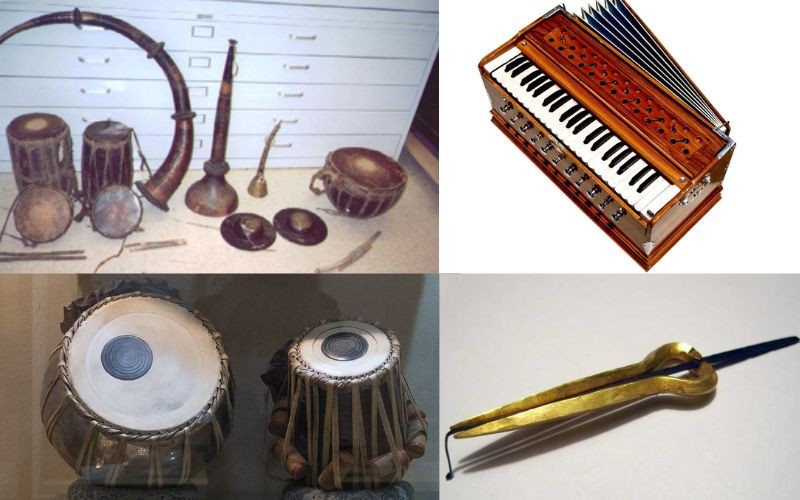
Other notable indigenous instruments include the Murchunga, a type of jaw harp used in folk music, and the Binayo, another mouth harp traditionally played by Kirati communities. Cymbals such as the Jhyamta are also widely used in devotional and folk performances.
In the Terai region, particularly among Madhesi and Maithili communities, instruments such as the Harmonium, Tabla, and Dholak are commonly used. These instruments, although originating outside Nepal, have been adopted and integrated into local musical traditions.
In conclusion, the musical instruments of Nepal represent the country’s cultural diversity and historical depth. Each instrument carries its own unique sound and significance, reflecting the traditions of the communities that use them. Preserving and promoting these instruments is essential to maintaining Nepal’s rich cultural heritage in an increasingly modern world.
Also Read