For generations, few words in Nepal carried as much weight as "Olangchung Gola." Government employees warned each other, half-joking, that a bad career move might get them transferred there. In rural Taplejung, a football kicked far out of bounds had "reached Gola." The name became shorthand for the farthest place imaginable.
Yet this small Himalayan village was never really the edge of anything. For centuries, it sat at the very center of a thriving trans-Himalayan world.
Perched at about 3,200 metres in the upper Tamor Valley of Taplejung District, close to the Tibetan border, Olangchung Gola was once one of eastern Nepal's most important trading posts. "Gola" means "market" in the local language, and the name fits.
Caravans crossed the Tipta La pass, a little over 5,100 metres high, carrying salt, wool and grain between Tibet, Nepal and Sikkim. Nearby villages such as Yangma, Ghunsa, Lungthung and Lelep all depended on its trade.
History passed through here too. In 1775, a treaty with Sikkim was negotiated in the village in the presence of Tibetan representatives. In 1892, the Sikkimese ruler Thutob Namgyal hid here while trying to escape into Tibet.
Even the village's name comes wrapped in legend. One story tells of lost Tibetan pilgrims guided to safety by a small mongoose-like creature called "Olung." Another credits a wolf and an early trader.
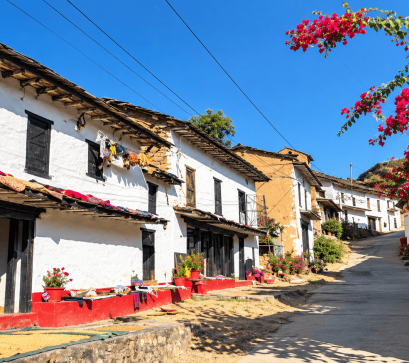
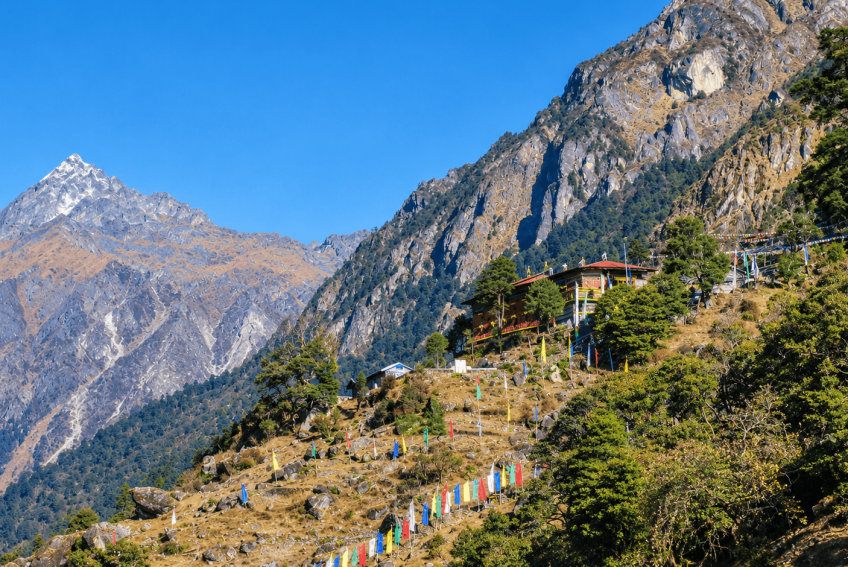
The village is home to the Walung people, descendants of Tibetan traders who practise Nyingma Buddhism. Above the settlement stands the centuries-old Deki Chholing Gompa, and below it lie around 50 to 60 traditional stone-and-wood houses. Inside, lamps burn beside prayer spaces, flour-drawn Buddhist symbols decorate the beams, and daily life gathers around broad hearths.
Hospitality here is an art. Guests are pressed to drink cup after cup of tea and are sent off with a khada, a ceremonial scarf. The famous "Gola carpets" once found buyers in Darjeeling, Kathmandu and even the United States.
The community's closeness shows in its politics, too. In the 2017 local election, residents chose their ward chairperson by consensus rather than by vote, so that rivalries would not divide neighbours.
Now the old stereotype is fading. The North-South Highway has brought Olangchung Gola into Nepal's road network, and Nepal Telecom recently switched on 4G service. Cross-border trade has mostly stopped since China tightened its border after the Covid-19 pandemic, but tourism is opening a new door.
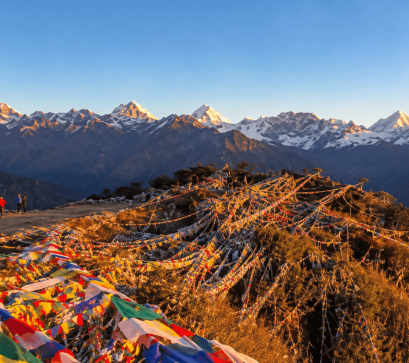
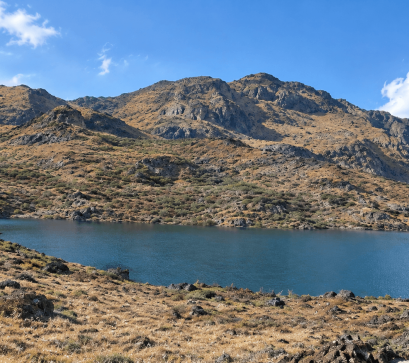
Trekkers now climb beyond the village to Singjema Lake, at around 4,700 metres, and over a 5,100-metre pass to the twin Samdo lakes. The village is also a staging point on the Great Himalayan Trail toward the Lumbasumba La.
Olangchung Gola may no longer be the symbol of remoteness it once was. That may be exactly why now is the time to go: before the world fully arrives, while the tea is still poured again and again.