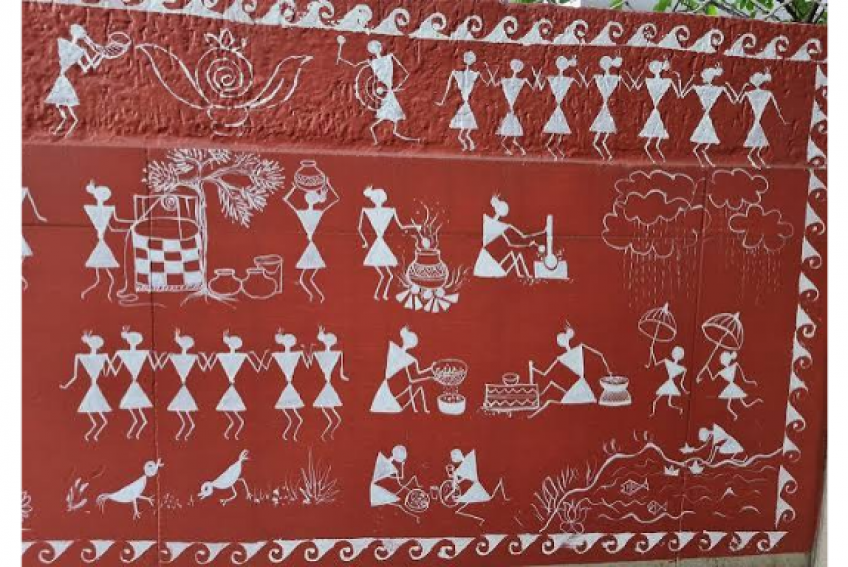
In Nepal’s Lumbini Province, Dang District is known for its fertile valleys, cultural diversity, and rich Tharu heritage. Among its most fascinating traditions is the art of decorating homes with clay murals and sculpted designs. Practiced particularly by the Dangaura Tharu community, this indigenous art form transforms ordinary mud walls into meaningful expressions of history, spirituality, and everyday life.
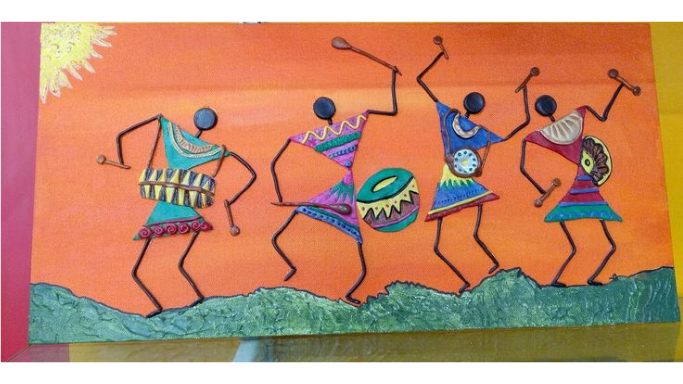
Unlike modern paintings displayed in galleries, traditional Tharu murals are closely connected to the homes and communities where they are created. Their designs often feature birds, animals, geometric patterns, and symbols inspired by nature, reflecting the community’s relationship with its surroundings.
One of the most significant traditions is Astimki painting, associated with Krishna Janmashtami. Created on freshly plastered walls, these ritual paintings illustrate traditional stories about the creation of life, the universe, and spiritual figures. Through simple lines and symbolic patterns, Astimki preserves cultural narratives passed down through generations.
Another distinctive feature is the use of clay bas-reliefs, where decorative figures are sculpted directly onto mud walls. Peacocks, elephants, and snakes are common motifs, traditionally associated with prosperity, fertility, protection, and harmony with nature.
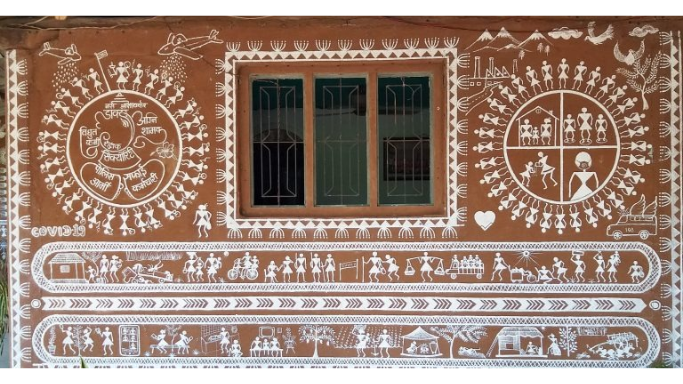
The beauty of these artworks lies in their simplicity. Artisans use locally available materials such as clay, straw, cow dung, and bamboo to prepare and decorate the walls. A smooth layer of fine mud provides the surface for painting or sculpting, while traditional colours may come from rice paste, natural clay, and plant-based pigments.
Decorative claywork around doors and windows, sometimes known as Mokha art, further enhances the appearance of traditional Tharu houses. These designs demonstrate how architecture and artistic expression have developed together within the community.
Beyond their visual appeal, the murals represent an important connection between generations. They communicate beliefs, celebrate festivals, and preserve knowledge that might otherwise disappear as traditional houses are gradually replaced by modern buildings.
For travellers interested in exploring this heritage, the Tharu Cultural Museum in Chakhaura, Dang, offers an opportunity to discover traditional architecture, cultural artefacts, and artistic expressions associated with Tharu life. The museum provides valuable insight into the customs and creativity of the community.
The clay murals of Dang remind us that art does not always require expensive materials or grand exhibition spaces. Sometimes, the most meaningful masterpieces are created from the earth itself.
More than decorative walls, these murals are living expressions of Tharu identity, carrying the memories, traditions, and cultural wisdom of generations into the future.